
The success of a poultry farm—whether a small backyard coop or a large-scale operation with thousands of chickens or turkeys—literally starts from the ground up. Damp and contaminated bedding promotes the development of footpad dermatitis, bacterial infections, coccidiosis and high ammonia concentrations that slow growth and reduce performance.
Visecorsa wood shavings, screened and free from contaminants, are designed to keep bedding dry, fluffy and dust-controlled, providing an optimal environment for the health and productivity of laying hens and broilers.
This article explains—without technical jargon and with practical advice—how to get the most out of wood shavings in floor-rearing systems, improve biosecurity and turn used bedding into a valuable resource.
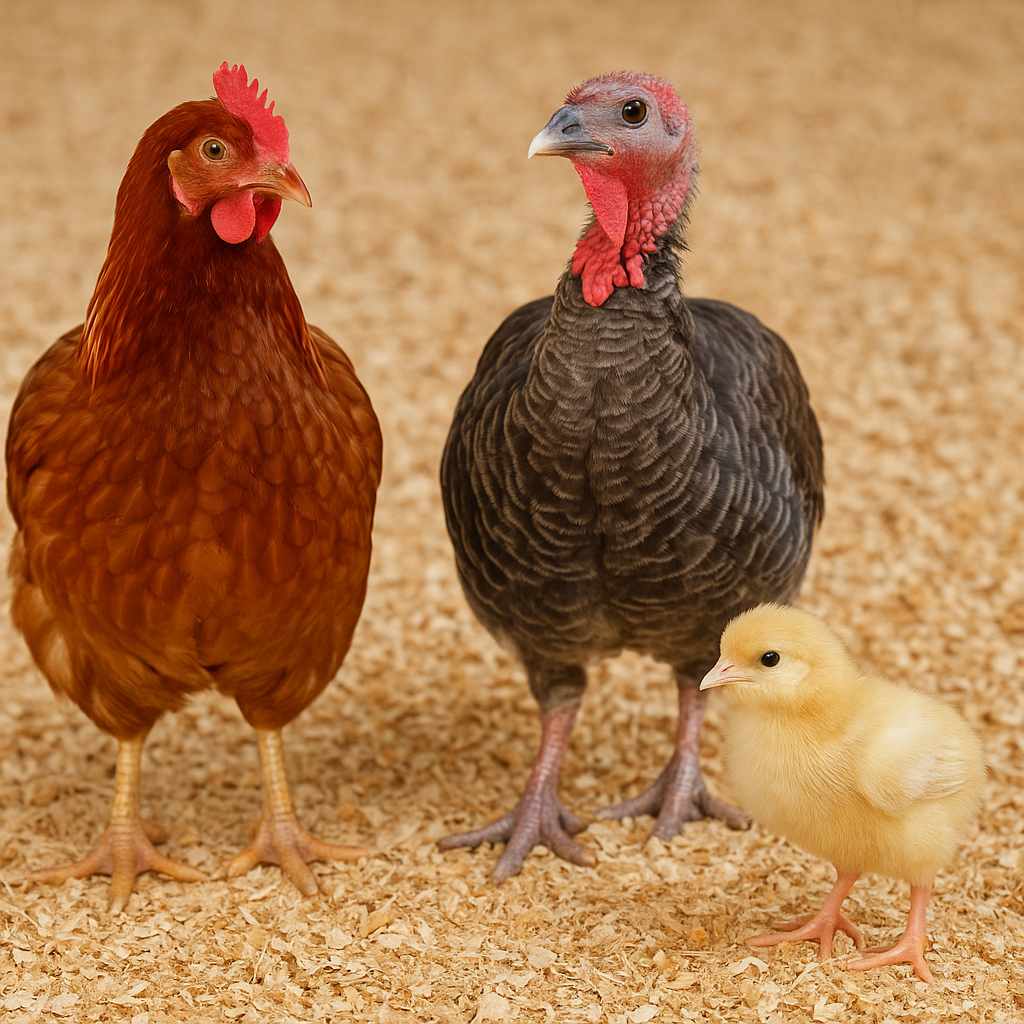
Why Wood Shavings Are the Smart Choice in Poultry Farming
| Key attribute | Visecorsa fine shavings | Chopped straw | Rice husks | Sand |
|---|---|---|---|---|
| Moisture absorption | High | Medium | Medium | Low |
| Dust level | Medium–low | Medium | High | Low |
| Pathogen control | Good | Fair | Poor | Good |
| Handling | Light, fluffy | Bulky | Volatile dust | Heavy |
| Composting compatibility | Excellent | Good | Medium | Limited |
Key Advantages of Visecorsa Wood Shavings
- High absorption capacity: debarked pine retains liquids and keeps the surface dry.
- Contaminant-free product: planing and double screening remove splinters and foreign particles.
- Reduced pathogens and pests: dry bedding creates an environment less favourable to bacteria, fungi and mites.
- Soft, cushioned texture: absorbs impact, reduces footpad injuries and encourages natural scratching behaviour.
- Light natural wood aroma: helps mitigate unpleasant odours without chemical additives.
From Forest to Poultry House: How the Shavings Are Made
- Raw material selection: certified Galician pine logs, free from chemical treatments.
- Fine planing: produces homogeneous flakes and avoids large pieces that could damage footpads.
- Double screening: the first sieve removes coarse splinters, leaving a controlled fine particle content.
- Natural drying
- Heat-sealed packaging: durable bags (approx. 15 kg) that preserve freshness, allow easy stacking and facilitate storage and distribution according to user needs.
Bedding Preparation: Step by Step for a Perfect Start
3.1 Cleaning and disinfection
- Completely remove the previous bedding.
- Sweep residual dust from beams and walls.
- Disinfect with an approved product and allow the floor to dry fully.
3.2 Spreading the wood shavings
- Use a thicker bedding layer in winter.
- Facilitates movement for young birds.
- Spread the shavings evenly with a wide rake until the desired thickness is reached.
- Check carefully for low spots where moisture could accumulate.
3.3 Seasonal adjustments
- Humid winter: increase initial thickness by at least 1 cm to improve insulation.
- Dry summer: maintain standard thickness and focus on ventilation to dissipate heat.
Daily and Weekly Management Routine
| Action | Objective |
|---|---|
| Break crusts with a rake | Allow the bedding to breathe |
| Remove compacted “clumps” and add fresh shavings | Keep the surface fluffy |
| Add shavings in high-traffic areas | Prevent compaction and footpad lesions |
| Check relative humidity inside the house | Adjust ventilation or add an extra layer |
Measurable Benefits for Welfare and Performance
- Healthier respiration: low dust and controlled ammonia reduce airway irritation.
- Improved feed conversion: more comfortable birds move more easily to feeders and drinkers, optimising intake.
Frequently Asked Questions
How much wood shavings will I need per cycle?
This depends on stocking density, ventilation and water leaks. Track consumption over two cycles and then adjust bedding thickness and replenishment. It also depends on the cubic metres or dimensions of the house and the litter area.
Does pine affect bird health?
No. The natural aroma dissipates quickly, and the low moisture content helps reduce pathogens.
How should I dispose of the bedding at the end of the flock?
Load it into a closed container. Composting, biogas plants or local agricultural use are common solutions. Visecorsa can advise you on the best option.
How to Get Started with Visecorsa
- Initial contact: tell us your floor area, bird density and ventilation system.
- Personalised plan: an advisor will recommend the right wood shaving format, initial thickness and replenishment frequency based on your climate.
- Delivery and follow-up: we deliver on protected pallets, review consumption after the first cycle and fine-tune quantities.
Conclusion
Choosing a fine, clean and highly absorbent wood shaving bedding is one of the simplest and most effective measures to keep a poultry house or turkey farm healthy, productive and with a lower workload.
Visecorsa’s Galician pine wood shavings achieve this by providing:
- Dry environments that limit pathogens
- Low dust levels that protect birds’ respiratory health
- Light, easy handling that speeds up cleaning routines
- Greater comfort and wellbeing for animal growth
If you want to take the next step towards more efficient poultry production, contact Visecorsa. You will receive tailored advice based on your bird numbers, climate and management system.
